
By Morgan Meer, Coordinator of Volunteers and Public Programs
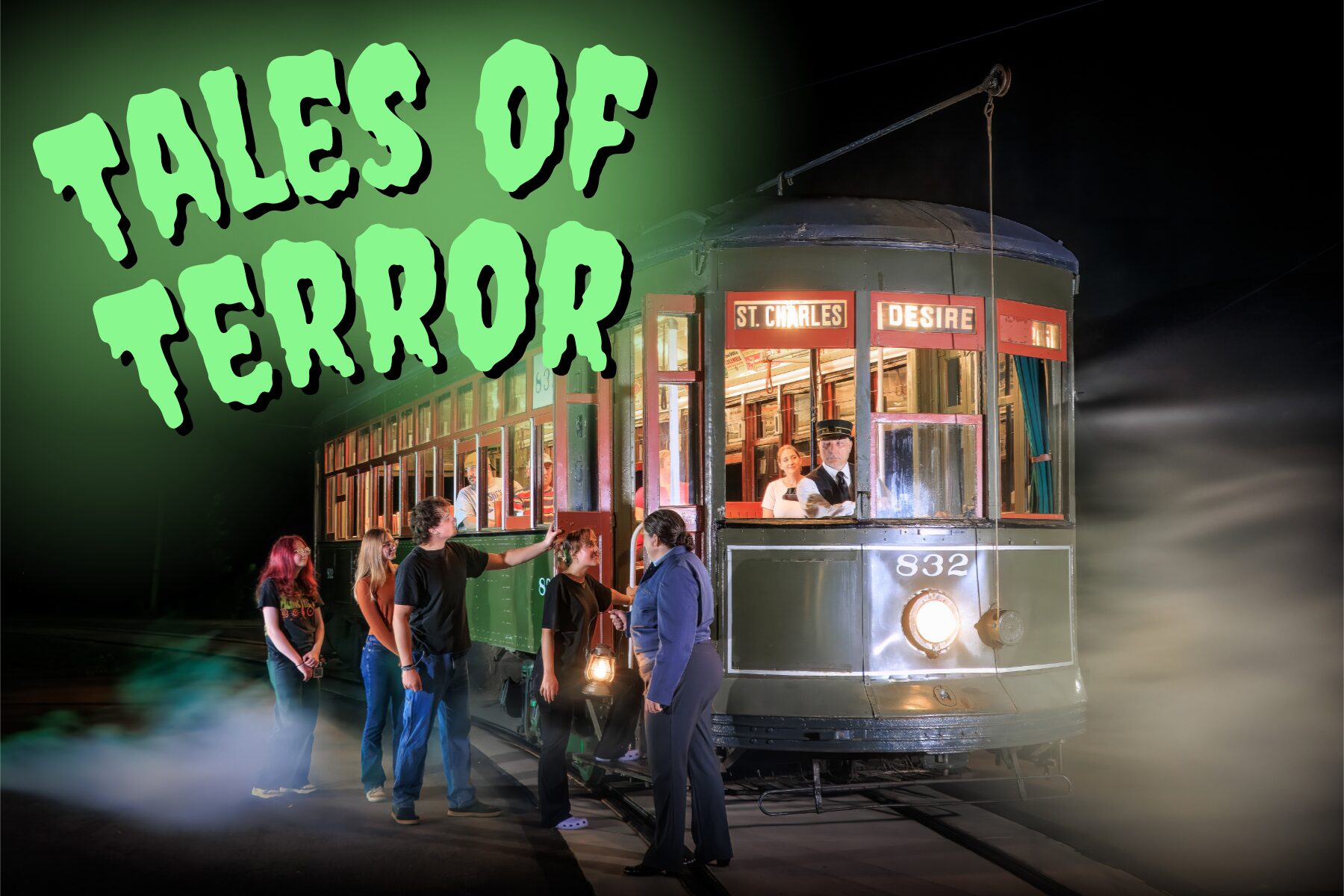
Earlier this month, at the Pennsylvania Trolley Museum’s first ever ghost tour, visitors had a spooky good time learning about the spirits that may haunt our streetcars.
First braving a lights-out tour of our Trolley Display Building, and then going for a terrifying trolley ride through the forest, visitors had the chance to experience up close the strange phenomena present along our trolley line.
Some may ask: are these ghost stories true? Are your trolleys really haunted? Those are questions that you’ll have to answer for yourself while visiting the Museum. However, to celebrate Halloween, we’d thought we would share some true facts about some of the ghosts supposedly spending their afterlives among our collection.
The Last Horse Car Driver
Pittsburgh’s horse car service, the Citizen’s Passenger Railway, started in 1859, and 20 years later, the line was running almost 300 different horsecars.
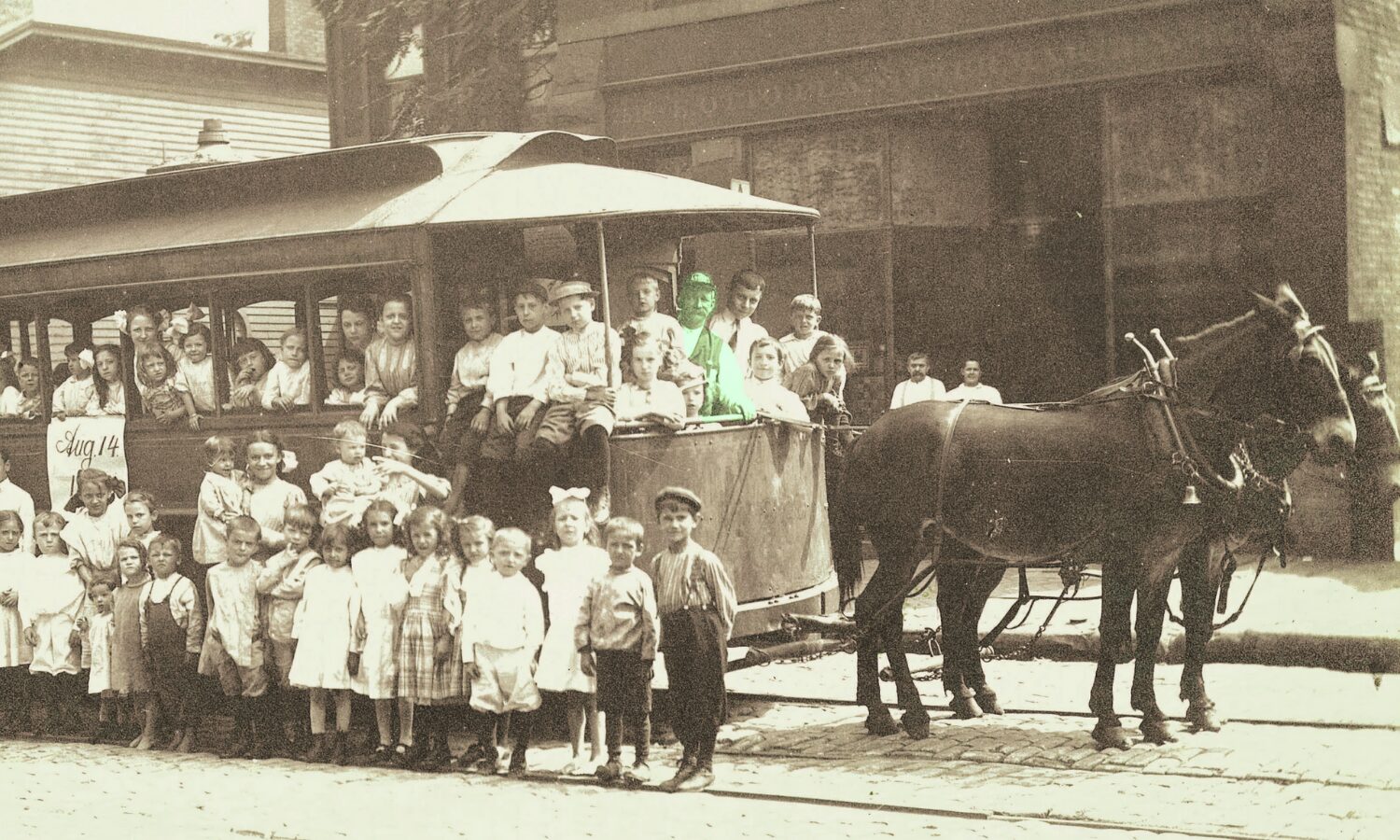
One of the drivers employed by the railway was named Mr. Frank Campbell. Every morning, Frank woke up, fed his mules Fritz and Jack, and started his route up and down Sarah Street in the city’s South Side. He made 8 round trips each day, each one taking him about an hour.
Over the years, technology progressed, and, eventually, most horsecars disappeared from the streets of Pittsburgh in favor of electric trolleys. Despite these changes, Frank continued his route, day after day, year after year. Eventually, he was the last horsecar driver left in Pittsburgh.
Frank retired in 1923, right before his 80th birthday. The photo above is also displayed in our Museum (minus the spooky green glow that surrounds Frank). It shows all the neighborhood kids dressed up for a picture with his horse car.
Frank’s car was eventually scrapped like hundreds of other Pittsburgh horsecars. But, there is one Pittsburgh horse car that survives (Federal Street & Pleasant Valley 101), and we have it at the Pennsylvania Trolley Museum. And, according to visitors from over the years, strange noises and person-shaped shadows inside the car make it seem like Frank has claimed this final horse car as his own.
The Christmas Eve Crash
Pittsburgh Railways Co. 3756, frequently parked in our Trolley Display Building, started service on the line from Pittsburgh to Washington, PA in 1925.
Its resident not-so-friendly ghost supposedly haunts this car because of its resemblance to Knoxville 4236, another “low-floor” Pittsburgh car. She had the misfortune to be on its last ever trip on Christmas Eve in 1917.
Dorothy Lafferty was 19 years old when she became a victim of the Mt. Washington Transit Tunnel Disaster. Her trolley car, Knoxville 4236, burst out of the tunnel at full speed and flew off the tracks into a crowd of pedestrians.
Bystanders who rushed to help described a bloody scene straight from a nightmare. Bodies had been crushed flat by the enormous trolley, and people’s severed arms, legs, and heads lay among the scattered Christmas presents in the debris. 23 people died from the accident and 112 were injured.
A few hours later, in a department store downtown, patrons were shocked by the arrival of a woman, covered in blood, wandering around the displays. A store policeman spoke to her- and discovered it was Dorothy! In shock after the accident, she had boarded another trolley and continued on to her intended destination.
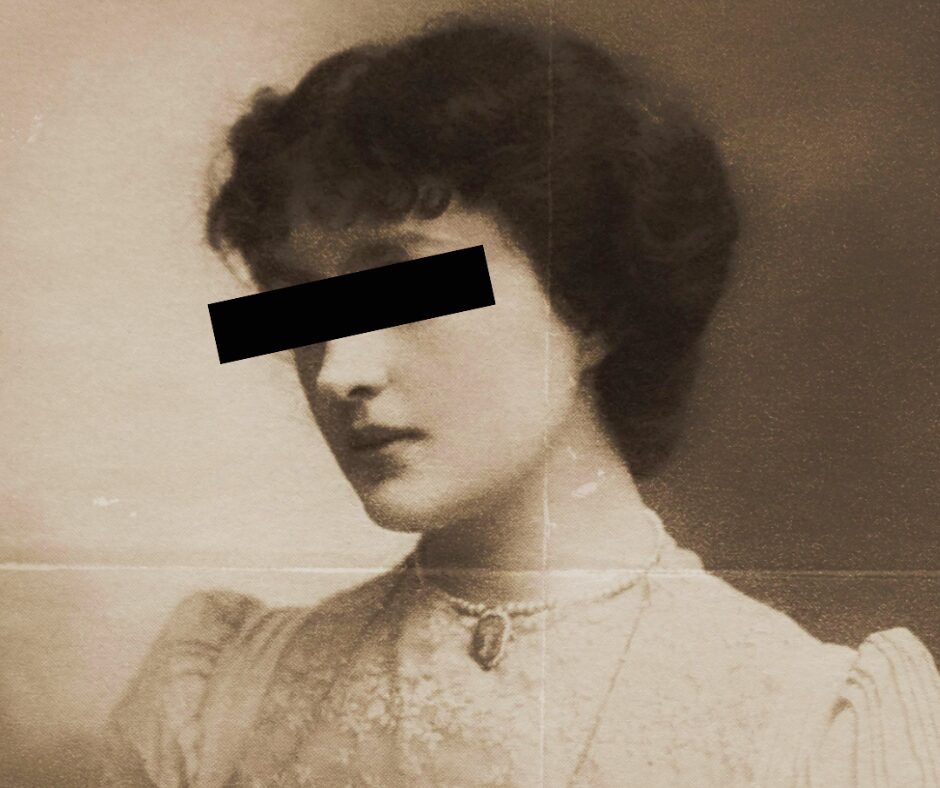
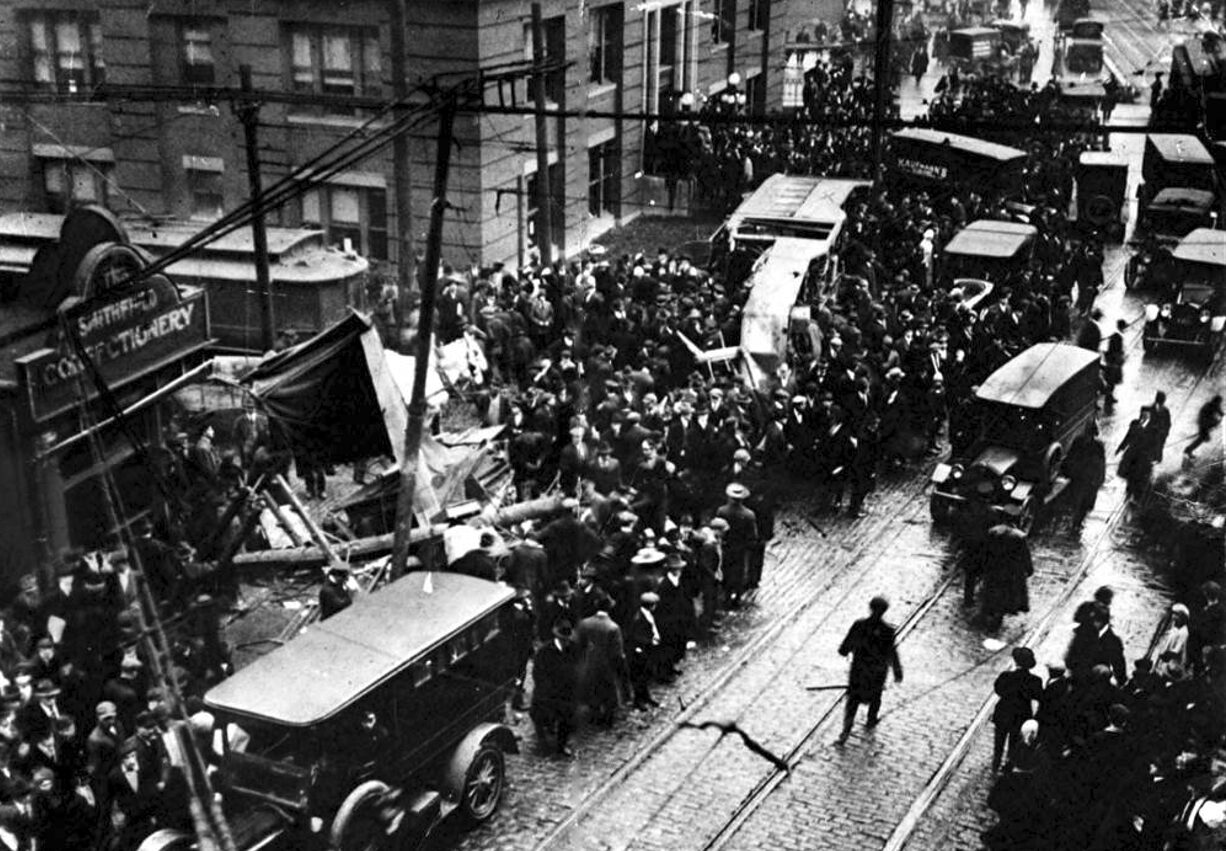
Dorothy went on to live for many more decades and died in Pittsburgh at the age of 68. It is unknown whether she dared to ride a trolley again during her lifetime. But many say that she does ride them in her afterlife. Perhaps her spirit, stuck in the same trance, continued to travel throughout the city on its streetcars. And perhaps, when our 3756 returned to the city from the Museum in the 70s for a special celebration, she mistook it for her Christmas Eve trolley and boarded it.
This would explain the strange sightings that occur in our low-floor car. Some say that after twilight, if you walk through the building, you may glance in these windows and see a blood-covered woman pacing back and forth. Her hat’s askew, her dress is ripped, and she goes up and down the trolley again and again.
Photo of the crash from Brookline Connection.
Learn more about this trolley crash by watching our Trolleyology with Mary Jane Kuffner Hurt, author of The Mount Washington Transit Tunnel Disaster.
A Streetcar Named Expire
1947 marked the premiere of Tennesse Williams’ famous play: A Streetcar Named Desire.
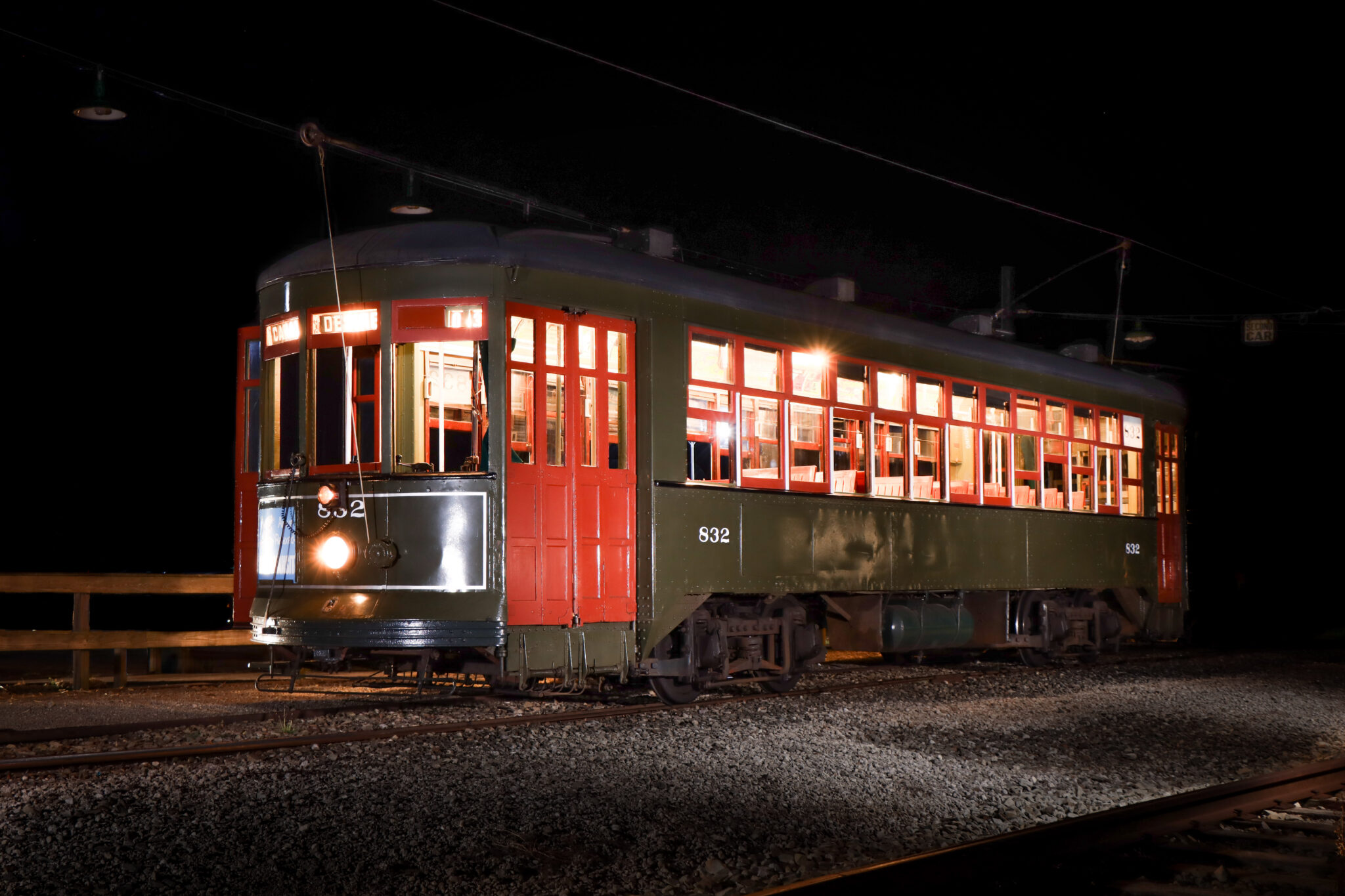
That year, Life Magazine ran an article about the show and included a picture of New Orleans 832, a car that ran on the real Desire Street Line in New Orleans. Now part of our collection, 832 is often called by the name of this play instead of its number.
This car has another nickname as well. In the 90s, Museum volunteers decided to put on a haunted house called the Streetcar named Expire. First, visitors toured the haunted carbarn, and then they boarded a trolley headed into the forest. While on their journey, the trolley would stop, and a masked man would leap aboard with a prop chainsaw. “Ah ha ha ha,” he’d laugh as he’d run up and down the aisle. “I got them all!”
The haunted house closed after a few years. But, sometimes we still call this streetcar by its spookier name. This trolley does have its fair share of strange occurrences: windows suddenly slamming shut, footsteps echoing up and down the car, and, every once in a while, a noise like there’s a sharp end of an axe being dragged down the center of the car- and we think we’ve discovered why.
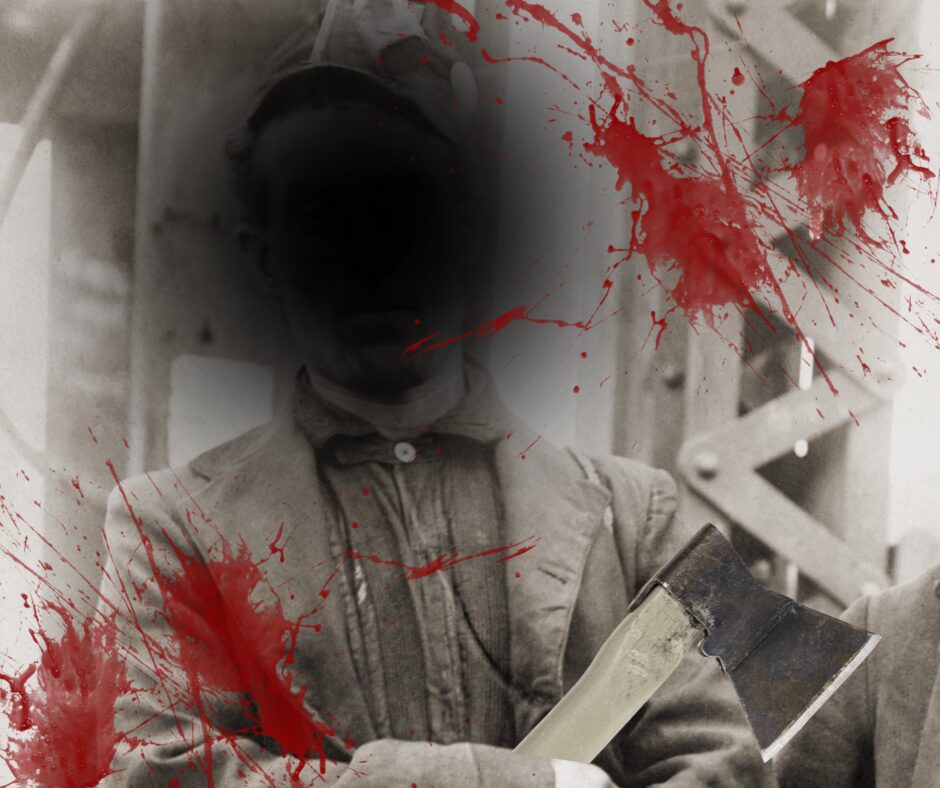
For almost 2 years, from 1918 to 1919, the people of New Orleans lived in fear of attack from a local serial killer. He was known the Axe Man, and he carried out his murders with the victims’ own axes that they kept in their houses.
On May 23, 1918, police found the bodies of grocer Joseph Maggio and his wife Catherine inside their apartment. Both victims had been slashed in the neck with a razor and repeatedly hit in the head by an axe. Catherine’s head was hanging onto her neck by just a strip of flesh.
That June, the Axe Man struck again. Louis Besumer and Harriet Lowe, who had been having an affair, were found unconscious, lying in their own blood. They also had been repeatedly hacked in the head with an axe. It was a miracle that they survived.
In August, Anna Schenider, eight months pregnant, was attacked by the Axe Man while lying in bed. She survived multiple blows to the heads, and gave birth to her daughter days later.
Over the next year, the Axe Man continued his reign of terror, killing dozens more. Police never did find out who was responsible for the attacks. They took in several suspects, but none were revealed as the killer. Many think that some of the murders might have been by copycat killers hoping to blame the Axe Man for their crimes. All we know is that for those two years, the people of New Orleans laid awake at night in fear of his attacks.
New Orleans is a city full of spooky history, and 832 ran there until the 1960s, so it’s possible that a number of specters could be haunting this car. However, when you’re in there late at night, and you hear the ear-splitting scrape echoing down the center of the car, getting closer and closer until it stops, it’s easy to imagine the ghost of Axe Man. Maybe, long ago, after getting away with his grisly crimes, he boarded this trolley in the neighborhood that he terrorized, and maybe his spirit never left.
Couldn’t make it to our ghost tour? Trolley Tales of Terror is expanding to multiple nights next year. Look for a save-the-date announcement, and, in the meantime, click here to learn about all our upcoming events.